Hire Data Scientists
Discover top Data Scientists with Lupa. Leverage Latin America's talent for 70% less, set up in 21 days, and enjoy seamless hiring. Elevate your team effortlessly.








.svg)









Hire Remote Data Scientists


Tomás is a skilled data analyst with a decade of experience, excelling in insightful analysis.
- Excel
- Data Visualization
- Power BI
- A/B Testing
- SQL


João is a Data expert who transforms raw information into clear, actionable insights.
- Data Analysis
- SQL
- Data Visualization
- Reporting
- Business Intelligence


Paola is a Data analyst passionate about translating patterns into clear insights.
- Data Analysis
- Data Modeling
- ETL Processes
- Dashboarding
- Reporting

Francisca, a skilled data scientist, excels in part-time roles with precision and insight.
- Python
- Statistics
- Feature Engineering
- Machine Learning
- Data Cleaning
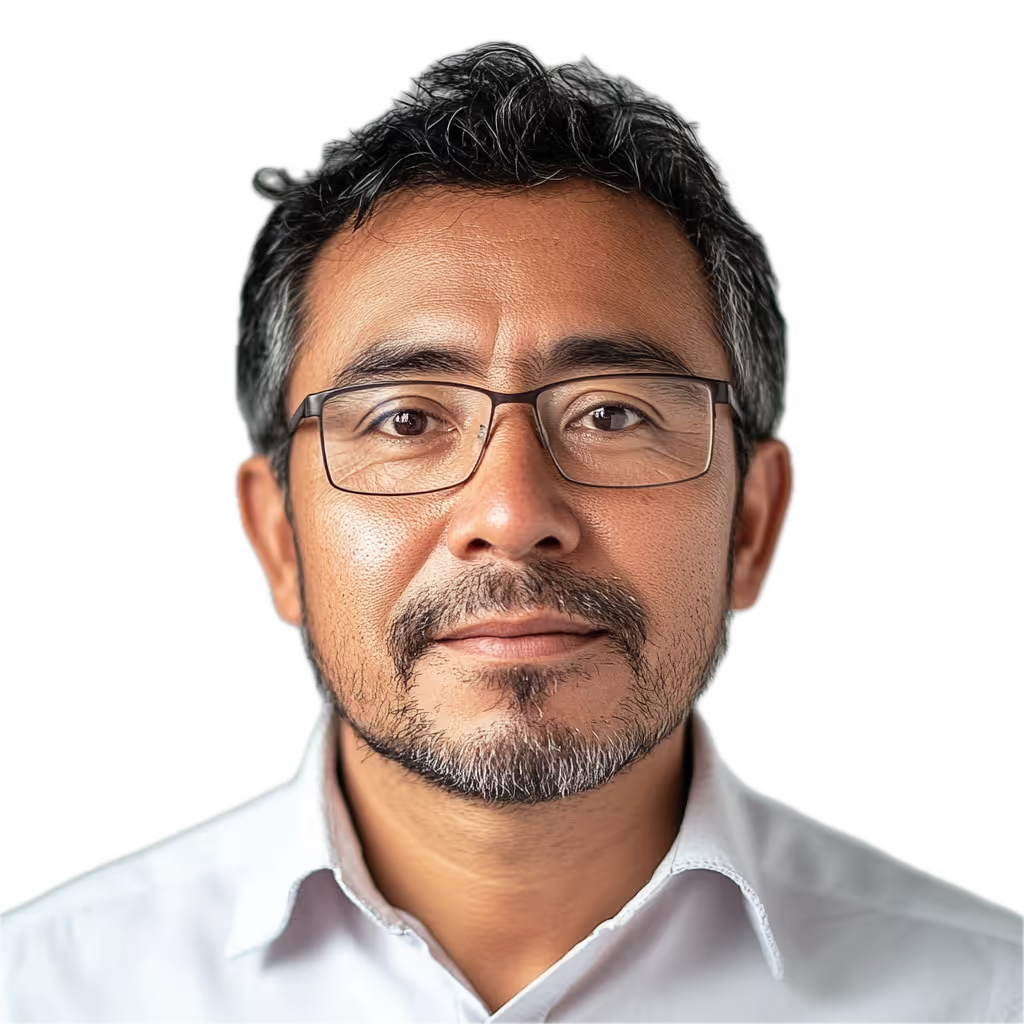

Héctor is a data strategist translating trends into clear, business-focused actions.
- Business Intelligence
- SQL & Data Lakes
- ETL Tools
- Descriptive Analytics
- Data Quality Assurance


Federico is a data thinker turning trends into opportunities for business growth.
- Data Analysis
- Insight Generation
- Reporting
- Business Intelligence
- Visualization Tools

Beatriz is a data-driven professional turning numbers into direction and clarity.
- Data Analysis
- Business Reporting
- SQL
- Insights Generation
- Dashboard Design


"What I love about Lupa Hire is their approach to sharing small, carefully selected batches of candidates. They focus on sending only the three most qualified individuals, which has already helped us successfully fill 20+ roles.”


"Talking about Lupa Hire, I would say: these are the people you want to work with. They understand what consultancies are like. They understand that they could work for a month on a req, only to have it pulled because a client contract didn’t go through. You understand our business model, and that is invaluable."

"We came to Lupa Hire with a need to hire key tech and AI positions in Latin America. Our target when working with them was to find the best of the best in the region and they delivered. Their approach goes beyond what you'd expect from a headhunter with an incredible focus on match quality."

Lupa's Proven Process
Together, we'll create a precise hiring plan, defining your ideal candidate profile, team needs, compensation and cultural fit.
Our tech-enabled search scans thousands of candidates across LatAm, both active and passive. We leverage advanced tools and regional expertise to build a comprehensive talent pool.
We carefully assess 30+ candidates with proven track records. Our rigorous evaluation ensures each professional brings relevant experience from industry-leading companies, aligned to your needs.
Receive a curated selection of 3-4 top candidates with comprehensive profiles. Each includes proven background, key achievements, and expectations—enabling informed hiring decisions.
Reviews
"What I love about Lupa Hire is their approach to sharing small, carefully selected batches of candidates. They focus on sending only the three most qualified individuals, which has already helped us successfully fill 20+ roles.”
"Talking about Lupa Hire, I would say: these are the people you want to work with. They understand what consultancies are like. They understand that they could work for a month on a req, only to have it pulled because a client contract didn’t go through. You understand our business model, and that is invaluable."
"We came to Lupa Hire with a need to hire key tech and AI positions in Latin America. Our target when working with them was to find the best of the best in the region and they delivered. Their approach goes beyond what you'd expect from a headhunter with an incredible focus on match quality."

"Before Lupa Hire, we struggled to find a vendor who could match both the volume and the quality we needed to build out our senior development team in Mexico. Lupa gave us real visibility into the pipeline and consistently sent us candidates who actually fit, not just resumes, but people who understood product engineering. It's made a real difference in how fast we've been able to grow the team."


“With Lupa Hire, we rebuilt our entire tech team in less than a month. We’re spending half as much on talent. Ten out of ten”


"We hired 2 of our key initial developers with Lupa Hire. The consultation was very helpful, the candidates were great and the process has been super fluid. We're already planning to do our next batch of hiring with Lupa. 5 stars."


“We’ve worked with Lupa Hire on multiple roles, and they’ve delivered time and again. From sourcing an incredible Senior FullStack Developer to supporting our broader hiring needs, their team has been proactive, kind, and incredibly easy to work with. It really feels like we’ve gained a trusted partner in hiring.”


"Lupa Hire goes beyond typical headhunters. They helped me craft the role, refine the interview process, and even navigate international payroll. I felt truly supported—and I’m thrilled with the person I hired. What stood out most was their responsiveness and the thoughtful, consultative approach they brought."


"What Growth99 loves about working with Lupa Hire is how well they understand our needs. They don't just fill one role; they help us build out a whole team that fits together."


“The quality of candidates is great. Your pricing is reasonable. People are great to work with. I can't imagine a better experience.”

Data Scientist Soft Skills
Communication
Translate complex data insights into straightforward narratives for stakeholders
Problem Solving
Innovate to find patterns and solutions from messy and unstructured data
Team Collaboration
Partner with cross-functional teams to integrate data-driven strategies
Adaptability
Quickly adjust to new data tools and changing business priorities
Time Management
Efficiently juggle multiple projects and deadlines
Critical Thinking
Challenge assumptions and refine models for the most accurate predictions
Data Scientist Skills
Statistical Analysis
Applying statistical methods to interpret and analyze large data sets for actionable insights.
Machine Learning
Designing and training models to make predictions and automate decision-making processes.
Data Visualization
Creating visual representations of data using tools like Tableau and Matplotlib for better understanding.
Big Data Technologies
Working with Hadoop, Spark, and other platforms to manage and process massive data sets.
Data Wrangling
Cleaning and transforming raw data into a usable format for analysis.
Data Mining
Discovering patterns and extracting valuable information from large data sets.
How to Write an Effective Job Post for Hiring Data Scientists
Recommended Titles
- Machine Learning Engineer
- Data Analyst
- Data Engineer
- Business Intelligence Analyst
- Quantitative Analyst
- Research Scientist
Role Overview
- Tech Stack: Expert in Python, R, SQL, and data visualization tools.
- Project Scope: Analyze complex datasets, develop predictive models, and support data-driven decision-making.
- Team Size: Work within a collaborative team of 8 data professionals.
Role Requirements
- Years of Experience: Minimum of 3 years in data science roles.
- Core Skills: Strong analytical skills, statistical knowledge, and machine learning expertise.
- Must-Have Technologies: Experience with TensorFlow, scikit-learn, and Tableau.
Role Benefits
- Salary Range: Competitive salary based on experience and skills, $90,000 - $130,000.
- Remote Options: Flexible remote work arrangements available to support work-life balance.
- Growth Opportunities: Access to continued education, mentorship programs, and leadership opportunities.
Do
- Mention salary range and perks clearly
- Specify essential skills and experience
- Share insights about company culture and values
- Emphasize career development potential
- Use clear and engaging language
Don't
- Don't use jargon without explanation.
- Don't overlook soft skills needed.
- Don't create unrealistic expectations.
- Don't leave out team culture.
- Don't forget to mention growth opportunities.
Top Data Scientist Interview Questions
Essential questions for evaluating Data Scientists
Can you explain a machine learning project you've worked on from start to finish?
The candidate should demonstrate a clear understanding of the entire project lifecycle, including data collection, preprocessing, model selection, evaluation, and deployment. Look for their ability to detail their thought process and decision-making at each stage.
How do you handle missing or incomplete data in your datasets?
Look for familiarity with techniques like imputation, interpolation, or algorithms that can handle missing data natively. The candidate should also explain their reasoning for choosing specific methods.
Can you describe the difference between supervised and unsupervised learning?
The candidate should articulate that supervised learning involves labeled data and aims to predict outcomes, while unsupervised learning involves uncovering hidden patterns in data that isn’t labeled.
How do you evaluate the performance of a machine learning model?
Expect discussion about metrics like accuracy, precision, recall, F1-score, and AUC-ROC. The candidate should also mention the importance of cross-validation and possibly model interpretability.
Describe a situation where you had to optimize an algorithm for performance. What steps did you take?
The candidate should highlight their ability to identify bottlenecks, employ techniques like dimensionality reduction or parallel processing, and discuss trade-offs between model complexity and computational efficiency.
Can you describe a complex data problem you solved and the process you used?
Look for a structured approach, such as defining the problem, breaking it down, analyzing data, and implementing a solution. Listen for examples of critical thinking and adaptability.
How do you approach a problem when you don't have all the necessary data?
Seek evidence of creativity and resourcefulness, such as finding alternative data sources, making assumptions, or working with stakeholders to gather data. Adaptability is key.
Describe a time when your analysis led to a significant decision or change in a project.
Evaluate if the candidate can demonstrate how their insights made a measurable impact, their ability to communicate findings, and their influence on decision-making.
What strategies do you use to validate the accuracy of your data and analysis?
Look for methods like cross-validation, using multiple models, or collaborating with peers. The candidate should show diligence and attention to quality control.
How do you prioritize tasks when dealing with tight deadlines and multiple projects?
Assess if the candidate has a systematic approach for prioritization, such as considering impact, urgency, and resource availability. They should show an ability to manage time effectively.
Can you give an example of how you handled a conflict within a team?
Look for the candidate’s ability to address the conflict directly, facilitate open communication, and reach a resolution that everyone agrees on. Their approach should reflect empathy and integrity.
How do you prioritize your tasks when you have tight deadlines and multiple projects?
Observe if the candidate mentions strategies like planning, delegating, and following through on priorities. They should convey clear thought processes, adaptability, and composure under pressure.
Describe a time when you had to convey complex information to a non-technical audience. How did you ensure they understood?
Focus on the candidate’s ability to simplify technical concepts and tailor their communication style. Look for attention to audience needs and evidence of checking for understanding.
How have you contributed to creating a positive team culture?
Seek insights into the candidate’s ability to encourage collaboration, recognize contributions, and foster a supportive atmosphere. They should demonstrate proactive efforts to uplift the team spirit.
During high-pressure situations, how do you maintain your focus?
Evaluate the candidate’s stress management techniques and resilience. They should illustrate their ability to stay organized and maintain clarity through structured approaches.
- Poor Communication Skills
- Inability to Receive Feedback
- Lack of Problem-Solving Ability
- Consistently Missing Deadlines
- Unwillingness to Learn

Build elite teams in record time, full setup in 21 days or less.
Book a Consultation CallWhy We Stand Out From Other Recruiting Firms
From search to hire, our process is designed to secure the perfect talent for your team

Local Expertise
Tap into our knowledge of the LatAm market to secure the best talent at competitive, local rates. We know where to look, who to hire, and how to meet your needs precisely.

Direct Control
Retain complete control over your hiring process. With our strategic insights, you’ll know exactly where to find top talent, who to hire, and what to offer for a perfect match.

Seamless Compliance
We manage contracts, tax laws, and labor regulations, offering a worry-free recruitment experience tailored to your business needs, free of hidden costs and surprises.
Lupa will help you hire top talent in Latin America.
Book a Consultation Call
I help companies hire exceptional talent in Latin America. My journey took me from growing up in a small town in Ohio to building teams at Capital One, Meta, and eventually Rappi, for which I moved from Silicon Valley to Colombia and had to recruit a local tech team from scratch. That’s where I realized traditional recruiting was broken, and how much available potential there was in Latin American talent. Almost ten years later, I still work closely with Latin American professionals, both for my company and for clients. They know US business culture, speak great English, work in the same time zones, and bring strong skills and dedication at a better cost. We have helped companies like Rappi, Globant, Capital One, Google, and IBM build their teams with top talent from the region.
Top Data Scientist Interview Questions
Essential questions for evaluating Data Scientists
Can you explain a machine learning project you've worked on from start to finish?
The candidate should demonstrate a clear understanding of the entire project lifecycle, including data collection, preprocessing, model selection, evaluation, and deployment. Look for their ability to detail their thought process and decision-making at each stage.
How do you handle missing or incomplete data in your datasets?
Look for familiarity with techniques like imputation, interpolation, or algorithms that can handle missing data natively. The candidate should also explain their reasoning for choosing specific methods.
Can you describe the difference between supervised and unsupervised learning?
The candidate should articulate that supervised learning involves labeled data and aims to predict outcomes, while unsupervised learning involves uncovering hidden patterns in data that isn’t labeled.
How do you evaluate the performance of a machine learning model?
Expect discussion about metrics like accuracy, precision, recall, F1-score, and AUC-ROC. The candidate should also mention the importance of cross-validation and possibly model interpretability.
Describe a situation where you had to optimize an algorithm for performance. What steps did you take?
The candidate should highlight their ability to identify bottlenecks, employ techniques like dimensionality reduction or parallel processing, and discuss trade-offs between model complexity and computational efficiency.
Can you describe a complex data problem you solved and the process you used?
Look for a structured approach, such as defining the problem, breaking it down, analyzing data, and implementing a solution. Listen for examples of critical thinking and adaptability.
How do you approach a problem when you don't have all the necessary data?
Seek evidence of creativity and resourcefulness, such as finding alternative data sources, making assumptions, or working with stakeholders to gather data. Adaptability is key.
Describe a time when your analysis led to a significant decision or change in a project.
Evaluate if the candidate can demonstrate how their insights made a measurable impact, their ability to communicate findings, and their influence on decision-making.
What strategies do you use to validate the accuracy of your data and analysis?
Look for methods like cross-validation, using multiple models, or collaborating with peers. The candidate should show diligence and attention to quality control.
How do you prioritize tasks when dealing with tight deadlines and multiple projects?
Assess if the candidate has a systematic approach for prioritization, such as considering impact, urgency, and resource availability. They should show an ability to manage time effectively.
Can you give an example of how you handled a conflict within a team?
Look for the candidate’s ability to address the conflict directly, facilitate open communication, and reach a resolution that everyone agrees on. Their approach should reflect empathy and integrity.
How do you prioritize your tasks when you have tight deadlines and multiple projects?
Observe if the candidate mentions strategies like planning, delegating, and following through on priorities. They should convey clear thought processes, adaptability, and composure under pressure.
Describe a time when you had to convey complex information to a non-technical audience. How did you ensure they understood?
Focus on the candidate’s ability to simplify technical concepts and tailor their communication style. Look for attention to audience needs and evidence of checking for understanding.
How have you contributed to creating a positive team culture?
Seek insights into the candidate’s ability to encourage collaboration, recognize contributions, and foster a supportive atmosphere. They should demonstrate proactive efforts to uplift the team spirit.
During high-pressure situations, how do you maintain your focus?
Evaluate the candidate’s stress management techniques and resilience. They should illustrate their ability to stay organized and maintain clarity through structured approaches.
- Poor Communication Skills
- Inability to Receive Feedback
- Lack of Problem-Solving Ability
- Consistently Missing Deadlines
- Unwillingness to Learn