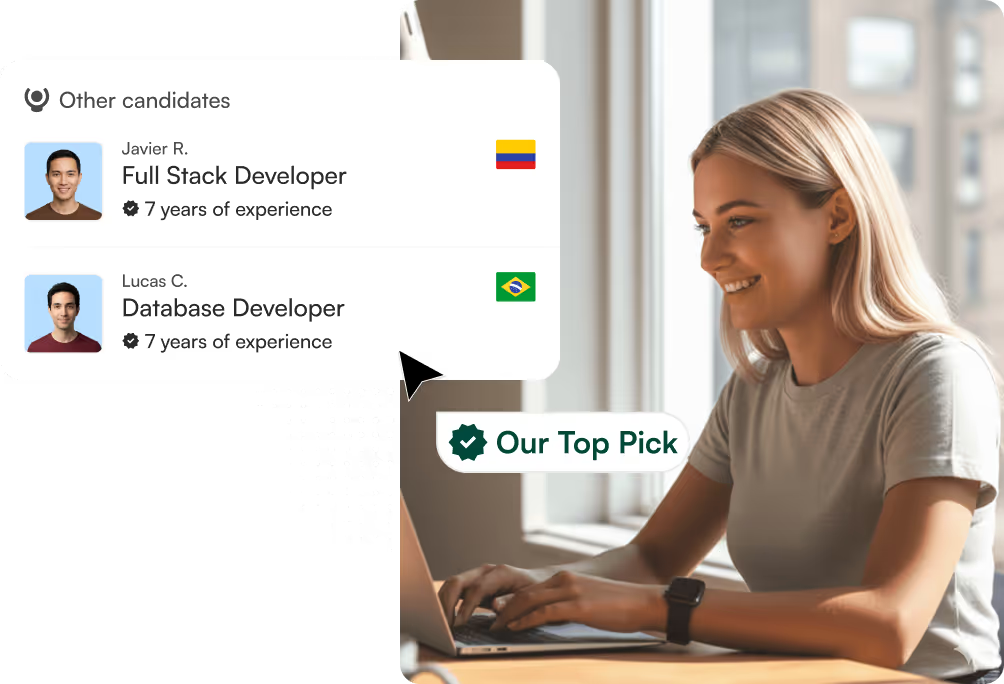
RPO vs Staffing: Key Differences & Which to Choose



Lupa will help you hire top talent in Latin America.
Book a Consultation Call
Lupa helps you build, manage, and pay your remote team. We deliver pre-vetted candidates within a week!
Book a Consultation CallCompanies outsourcing recruitment face a critical decision: partnering with traditional staffing agencies or engaging Recruitment Process Outsourcing (RPO) providers. This choice significantly impacts hiring quality, cost-effectiveness, time-to-hire, and your long-term talent acquisition strategy.
Most companies start with recruitment agencies for immediate hiring needs but often hit limitations as hiring volume increases or quality becomes inconsistent. Understanding the fundamental differences between RPO vs staffing enables better strategic decisions about building recruiting capabilities that align with your business goals and address core hiring challenges.
This guide covers clear definitions of RPO and staffing solutions, the seven key differences between these recruiting models, when to use each approach, cost comparison analysis, and how embedded RPO provides systematic recruiting services that traditional recruitment cannot deliver.
What Is a Staffing Agency?
Staffing agencies are third-party recruiting services that supply candidates, typically for short-term, contract, or contract-to-hire positions, to fill immediate staffing needs on a transactional basis. When you have vacancies, the recruitment agency sources candidates, conducts initial screening, and submits resumes for your review.
Core characteristics include:
- Per-placement fees of 15-25% of annual salary for full-time hire
- Hourly markups of 25-50% for contract workers
- Transactional relationships that end when positions fill
- Limited involvement beyond sourcing and initial screening
- Focus on speed over long-term quality
Common use cases: Short-term workforce needs, seasonal hiring surges, contract positions, filling immediate vacancies quickly, testing candidates through contract-to-hire arrangements, and one-off specialized roles.
Strengths: Fast candidate flow for urgent staffing needs, access to established candidate networks, no long-term commitment required, useful for fluctuating workforce demands.
What Is Recruitment Process Outsourcing (RPO)?
Recruitment Process Outsourcing is a strategic long-term partnership where an external RPO provider becomes an extension of your company's talent acquisition function. Unlike traditional recruitment, RPO takes ownership of your entire recruitment lifecycle, hiring strategy, and quality outcomes rather than simply supplying candidates for individual requisitions.
Core characteristics include:
- Monthly retainer pricing ($5,000-$15,000) based on hiring volume
- End-to-end process ownership from strategy to onboarding
- Custom methodology design including scorecards and evaluation frameworks
- Deep integration into company culture and operations
- Included technology infrastructure (ATS, analytics, sourcing tools)
- Scalability that adapts to changing hiring needs
Service scope includes: Workforce planning, sourcing strategy, screening and evaluation process design, interview coordination, employer branding, comprehensive analytics, and onboarding support focused on retention.
RPO model types: Embedded RPO (dedicated recruiters integrated into your company - Lupa's primary model), project RPO (time-bound engagement), selective RPO (certain roles/departments), and enterprise RPO (comprehensive recruitment).
7 Key Differences Between RPO and Staffing Agencies
1. Scope of Services
Staffing agencies provide limited recruiting services focused on candidate sourcing and initial screening. You handle job description refinement, hiring process design, cultural fit assessment, and onboarding. The agency's involvement ends at placement.
RPO providers take ownership of your end-to-end recruitment process including hiring strategy design, comprehensive sourcing strategy, interview coordination, offer strategy, onboarding support, and continuous process improvement based on data.
2. Relationship Model and Partnership Depth
Staffing agencies operate through transactional relationships that start when a requisition opens and end when it's filled. They work with multiple competing clients simultaneously, limiting depth of understanding about your company culture.
RPO partnerships create strategic long-term relationships where the RPO partner integrates deeply into your operations. RPO recruiters function as extensions of your team, participating in planning meetings and building relationships with hiring managers.
3. Quality Focus vs Speed Focus
Traditional staffing prioritizes speed above other considerations. Success gets measured by placement volume and time-to-hire. The incentive structure may compromise quality screening when speed and thoroughness conflict.
RPO solutions optimize for quality and retention alongside speed. RPO offers success measurement through hire quality metrics including performance ratings, retention rates at 6, 12, and 24 months, and hiring manager satisfaction with qualified candidates.
4. Talent Strategy and Pipeline Development
Staffing agencies take reactive approaches that begin when vacancies occur. They search databases of active job seekers with limited proactive talent pipeline building for future needs.
RPO providers build proactive recruitment strategies and develop talent pipelines before vacancies arise. They maintain ongoing relationships with passive candidates and conduct market intelligence about right talent availability in key roles.
5. Technology and Analytics
Staffing agencies use basic applicant tracking systems with limited analytics beyond reporting placements and basic time-to-hire metrics.
RPO providers include comprehensive technology infrastructure with sophisticated ATS, CRM platforms for talent pool management, sourcing tools, and analytics platforms tracking source of hire, cost-per-hire, quality metrics, retention rates, and diversity data.
6. Cost Structure and ROI
Traditional staffing operates on per-placement fees of 15-25% of annual salary or 25-50% markups on hourly rates. For 20 placements at $80,000 average salary, you'll pay approximately $240,000-$400,000 in fees annually.
RPO services use monthly retainer models of $5,000-$15,000 depending on volume and complexity. Annual investment typically ranges from $60,000-$180,000, with most growth-stage companies investing $80,000-$120,000. For 20 hires with $100,000 RPO investment, cost-per-hire equals $5,000 versus $12,000-$20,000 through staffing.
7. Employer Branding and Candidate Experience
Staffing agencies have limited involvement in building your employer brand. Candidate experience often feels impersonal because agencies represent multiple companies simultaneously.
RPO providers actively build and promote your employer brand. They create consistent positive candidate experiences that authentically reflect your company culture, improving offer acceptance rates and new hire engagement.
When to Use Staffing Agencies
Staffing solutions work best when you need:
- Immediate short-term or contract workers
- Low hiring volume (1-4 roles annually)
- Seasonal or project-based work
- Quick fills for unexpected departures
- Contract-to-hire testing arrangements
- Highly fluctuating workforce demands
Limitations to recognize: Quality inconsistency, limited cultural fit assessment, no process improvement over time, costs don't decrease with familiarity, minimal strategic talent planning.
When to Use RPO (Recruitment Process Outsourcing)
RPO solutions work best when you need:
- Consistent hiring volume (5+ roles quarterly)
- High-volume hiring across multiple departments
- Quality and retention as critical priorities
- Strategic recruiting capability without building large internal teams
- Scalable recruiting capacity for full-time positions
- Process improvement and optimization
- Employer brand development and proactive talent pipelines
- Cost-effectiveness at scale
Embedded RPO specifically serves companies wanting maximum integration depth. Dedicated recruiters function as true team extensions, understanding your culture intimately. This is Lupa's primary model for growth-stage companies.
The strategic advantage: RPO builds recruiting capability that compounds over time. Each hire deepens understanding of success factors, refines the hiring process, strengthens employer brand, and develops talent pipelines for accessing top talent.
Cost Comparison: RPO vs Staffing Agencies
Staffing agency costs:
- Direct hire: 15-25% of first-year salary per hire
- For $80,000 role: $12,000-$20,000 in fees
- 20 placements annually: $240,000-$400,000 total
RPO costs:
- Monthly retainer: $5,000-$15,000
- Annual investment: $60,000-$180,000 (most companies $80,000-$120,000)
- 20 hires with $100,000 investment: $5,000 per hire
Volume efficiency: At 10 hires annually, RPO cost-per-hire equals $10,000. At 20 hires, it drops to $5,000. At 40 hires, it decreases to $2,500. Staffing costs remain constant at $12,000-$20,000 per placement.
Break-even point: RPO typically becomes more cost-effective at 5-10+ hires annually. Beyond direct savings, RPO's quality focus reduces expensive turnover costs (replacing bad hires costs 50-200% of salary).
Quality of Hire: RPO vs Staffing Agency
Staffing quality considerations: Speed-focused incentives may compromise thorough screening. Limited cultural fit assessment due to shallow company understanding. Variable quality depending on the assigned recruiter.
RPO quality advantages: Success measured by quality, retention, and performance. Deep cultural understanding through embedded partnership. Custom screening methodology for identifying qualified candidates for your specific needs. Continuous improvement based on performance data.
The retention difference: Industry research shows RPO placements typically demonstrate 15-30% higher retention rates than staffing placements. For companies where employee turnover costs $50,000-$200,000 per departure, this improvement creates substantial value beyond recruiting costs.
Can You Use Both RPO and Staffing?
Many organizations implement hybrid approaches: RPO for strategic permanent hiring and core full-time roles, staffing agencies for temporary coverage, emergency fills, or specialized contract work.
How to structure successfully:
- Clearly define which roles go to your RPO partner versus staffing
- Use RPO as primary strategic partner coordinating with staffing when needed
- Track source of hire data to understand which recruiting model serves situations best
Common evolution: Companies start with traditional recruitment agencies, hit quality or cost limitations as hiring challenges grow, transition core hiring to RPO while maintaining selective staffing relationships for appropriate short-term use cases.
How Embedded RPO Delivers Methodology-Driven Recruiting
Embedded RPO represents the most integrated form of RPO partnership, particularly valuable for growth-stage companies wanting maximum quality and cultural alignment to attract top talent.
What embedded RPO provides:
Custom methodology before sourcing creates scorecards defining success criteria, evaluation frameworks ensuring consistent assessment, and structured hiring processes. This front-loaded approach prevents expensive hiring mistakes.
Deep integration as team extension means embedded recruiters function as part of your team, participating in meetings, building hiring manager relationships, and aligning with business goals and hiring strategy.
Multi-method recruitment strategies systematically implement employee referral programs, direct sourcing of passive candidates, strategic job board usage, social media recruiting, professional network engagement, and talent pool database management.
Technology and analytics infrastructure includes ATS, CRM for talent pools, sourcing tools, analytics tracking quality by source, and reporting on cost-per-hire, retention, diversity metrics, and candidate experience.
Quality and retention focus with success measured by hire performance ratings, retention rates at multiple milestones, hiring manager satisfaction, offer acceptance rates, and diversity outcomes. This addresses core hiring challenges that traditional recruitment cannot solve.
Geographic expertise for LATAM hiring provides country-specific recruiting intelligence. Mexico, Colombia, Argentina, Brazil, and Costa Rica each require different sourcing strategies, cultural assessment frameworks, salary knowledge, and building strong remote team culture approaches.
Industry-specific expertise: Whether you're hiring for healthcare, technology, or other specialized sectors, embedded RPO providers understand industry-specific talent markets and can adapt recruitment strategies accordingly.
Best for: Companies hiring 5+ roles quarterly, organizations facing high-volume hiring needs, companies wanting quality-first recruiting, businesses frustrated with staffing inconsistency, and situations where both quality and cost-effectiveness matter.
Making the Decision: RPO vs Staffing Agency
Choose staffing solutions when:
- Hiring 1-4 roles annually with low consistent volume
- Need immediate short-term or contract workers
- Facing unexpected urgent vacancies
- Seasonal or project-based work
- Workforce demands fluctuate unpredictably
- On-site temporary coverage needed quickly
Choose RPO services when:
- Hiring 5+ roles quarterly with consistent volume
- High-volume hiring across departments
- Quality and retention are critical priorities
- Want systematic recruiting capability without large internal teams
- Frustrated with current recruitment agency results
- Need cost-effective solution at scale
- Hiring full-time strategic positions
- Hiring across multiple markets requiring specialized knowledge
- Building long-term talent pipelines for accessing right talent
Questions to ask yourself:
- What's our annual hiring volume? (5+ quarterly favors RPO)
- How critical is quality vs speed? (Quality focus favors RPO)
- Are we facing persistent hiring challenges? (Indicates need for RPO)
- What's our budget: per-hire fees or monthly investment?
- Do we need short-term fills or full-time strategic hires?
Build Systematic LATAM Recruiting Capability
Understanding RPO vs staffing is the first step. For growth-stage companies hiring in Latin America, you need both sophisticated recruiting methodology AND regional intelligence across Mexico, Colombia, Argentina, Brazil, and Costa Rica.
Lupa delivers embedded RPO built on process, not just candidate access:
Custom scorecards before sourcing. Multi-method recruitment strategies systematically implemented. Deep LATAM regional intelligence with country-specific expertise. Quality focus measured by retention, not volume. Complete technology and analytics. Embedded integration as your team extension.
Best for U.S. companies hiring 5+ roles quarterly in LATAM who want quality-first recruiting that solves real hiring challenges.
Book a discovery call to discuss your LATAM hiring needs.
RPO vs Staffing FAQ
What is the main difference between RPO and staffing agencies?
Staffing agencies provide transactional candidate supply for immediate needs on per-placement fees. RPO provides strategic recruiting partnership taking ownership of entire recruitment process and quality outcomes on retainer model. Staffing focuses on filling roles quickly while RPO focuses on building systematic recruiting capability and delivering qualified candidates consistently.
Is RPO more expensive than staffing agencies?
RPO has higher upfront monthly commitment ($5,000-$15,000) but becomes more cost-effective at 5+ hires quarterly. For 20 annual hires, traditional staffing costs $240,000-$400,000 while RPO typically costs $80,000-$120,000. Plus RPO's quality focus reduces expensive turnover costs and improves cost-per-hire over time.
When should I use RPO instead of a staffing agency?
Use RPO when hiring 5+ roles quarterly, dealing with high-volume hiring, quality and retention are critical, you want systematic capability, you're frustrated with recruitment agency inconsistency, or you need cost-effective solutions at scale for full-time positions. Use staffing for immediate short-term needs, low volume (1-4 annually), or fluctuating demands.
Can I use both RPO and staffing agencies?
Yes, many use hybrid approaches: RPO for strategic permanent hiring, staffing solutions for temporary coverage or emergency fills. Clearly define which roles go to which partner. Use your RPO partner as primary strategic partner coordinating with staffing when appropriate for short-term needs.
Does RPO deliver better quality candidates than staffing agencies?
Generally yes, because RPO success is measured by quality and retention rather than placement speed. RPO placements typically show 15-30% higher retention rates. For roles where performance differences create significant impact, RPO's quality focus delivers better qualified candidates and addresses hiring challenges more effectively.
What's embedded RPO and how is it different?
Embedded RPO places dedicated recruiters who integrate deeply into your team rather than working externally. They function as team extensions with intimate cultural understanding and deliver highest quality outcomes. This is Lupa's primary recruiting model for growth-stage companies facing consistent hiring needs.
How does RPO handle high-volume hiring?
RPO providers scale recruiting capacity efficiently for high-volume hiring needs without requiring you to build large internal teams. They deploy proven recruitment strategies, leverage technology for efficiency, and maintain quality standards even at scale through systematic processes.


"What I love about Lupa Hire is their approach to sharing small, carefully selected batches of candidates. They focus on sending only the three most qualified individuals, which has already helped us successfully fill 20+ roles.”


"Talking about Lupa Hire, I would say: these are the people you want to work with. They understand what consultancies are like. They understand that they could work for a month on a req, only to have it pulled because a client contract didn’t go through. You understand our business model, and that is invaluable."

"We came to Lupa Hire with a need to hire key tech and AI positions in Latin America. Our target when working with them was to find the best of the best in the region and they delivered. Their approach goes beyond what you'd expect from a headhunter with an incredible focus on match quality."